Signs That Dental Implants in El Paso May Be Right for You
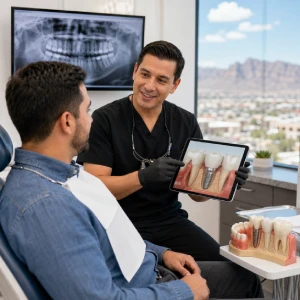
Losing a tooth — or knowing that one may need to be removed — raises immediate questions about what comes next and whether waiting is ever a safe option. For many patients, the answer to both questions becomes clearer once they understand what untreated tooth loss actually does to the surrounding bone and tissue over time. Our recent post comparing dental implants and dentures as tooth replacement options sparked a lot of follow-up questions, so this guide focuses on something more foundational: recognizing when dental implants are the right step to take.
TL;DR — How to Know Whether Implants Are Right for You
Dental implants offer a permanent, bone-preserving solution for patients who qualify — and recognizing the signs early leads to better outcomes. Here is what this blog covers:
- The most common physical and functional signs that implants may be needed
- Why jawbone loss after tooth loss makes timing important
- How existing dental work like crowns interacts with implant candidacy
- What our implant assessment involves and what patients can expect
- Why implants protect your remaining teeth and long-term oral health
6 Signs That Dental Implants in El Paso May Be the Right Solution
Most patients do not arrive at an implant consultation already knowing they need one. The signs tend to build over months — and understanding them helps you advocate for your own care.
-
You Have One or More Missing Teeth
The most direct sign is also the most obvious: a gap in your smile where a natural tooth once was. Whether from injury, decay, or extraction, a missing tooth leaves more than an aesthetic concern. Dental implants in El Paso replace both the visible tooth and the root beneath it, preserving the surrounding bone and preventing neighboring teeth from shifting into the empty space.
-
You Are Struggling with a Severely Damaged or Decayed Tooth
Sometimes the sign is not a missing tooth but one that cannot be saved. Severe fractures, decay that has reached the root, or repeated failed restorations may indicate that extraction and implant placement is the more reliable long-term path. Our dental team evaluates each case individually to determine whether preservation or replacement serves the patient's health better.
-
Your Existing Dental Crown or Bridge Is Failing
Older fixed bridges require grinding down adjacent healthy teeth to support the restoration. When a bridge fails or a crown is compromised beyond repair, many patients find that implant restoration is the more conservative option going forward. Dental crowns in El Paso can be placed on top of implant fixtures to replicate the look and function of a natural tooth without placing additional stress on neighboring teeth.
-
You Notice Changes in Your Jawline or Facial Structure
Jawbone loss following tooth extraction is a gradual process — and one that many patients do not connect to their missing tooth until visible changes appear. According to the American Academy of Implant Dentistry, the jawbone can lose up to 25% of its width within the first year after a tooth is lost. If you notice that your face appears to be changing in the area of a missing tooth, this is a clinical signal that bone resorption is underway and that a dentist should evaluate the site promptly.
-
Your Denture No Longer Fits the Way It Once Did
Ill-fitting dentures are a common sign of underlying bone volume loss — the same bone resorption that implants are designed to prevent and address. If your denture slips during eating or speaking, or requires frequent relining, implant-supported solutions may offer significantly greater stability and comfort. Patients who visit our dental office frequently describe denture instability as the moment that prompted them to consider implants seriously.
-
You Avoid Certain Foods Because of Chewing Discomfort
Tooth loss and failing restorations often lead patients to unconsciously restrict their diet — avoiding hard, crunchy, or chewy foods to prevent discomfort or embarrassment. When food choices are being shaped by dental limitations, that is a functional sign that restoration is needed. Our dental team will assess whether implants can restore full chewing efficiency and help you return to a comfortable, unrestricted diet.
Your Questions About Dental Implants in El Paso Answered
Am I too old to get dental implants?
Age alone does not disqualify a patient from implants. We evaluate bone density, overall health, and gum condition — not age. Many of our patients receive implants well into their sixties and seventies with excellent outcomes.
How do I know if I have enough bone for an implant?
This is determined through X-rays and imaging taken during your consultation. If bone volume is insufficient, bone grafting may be performed before implant placement to build an adequate foundation.
Can implants be placed the same day a tooth is extracted?
In some cases, yes — a process called immediate implant placement. Whether this is appropriate depends on the condition of the socket and surrounding tissue. Our team assesses each case individually before recommending a timeline.
Will my implant look different from my natural teeth?
Implants are topped with custom crowns designed to match the shape, size, and shade of your surrounding teeth. Most patients find that their implant is indistinguishable from their natural teeth once fully restored.
How long does the full implant process take?
From placement to final restoration, the process typically takes several months to allow for proper healing and osseointegration. Your individual timeline will depend on whether preparatory procedures are needed and how your bone responds to the implant.
Taking the First Step Starts with an Honest Conversation
The signs that dental implants may be right for you are often present long before patients act on them. At our practice, we believe in giving every patient a clear, honest picture of what is happening in their mouth and what their options are — without pressure and without guesswork. If you recognize any of the signs above, the next step is simply a conversation.
Visit our dental office in EL Paso or call us at (915) 581-8070 to schedule your dental implant consultation and find out whether implants are the right path for your smile.