Am I a Good Candidate for Dental Implants in El Paso?
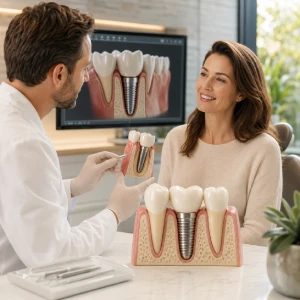
If you are missing one or more teeth, it is natural to wonder whether dental implants in El Paso are an option for you or if you should consider a bridge or denture instead. Many patients assume they are either "automatically eligible" or "automatically not eligible" based on one detail they heard online. In reality, candidacy is usually a combination of gum health, bone support, medical history, and your goals.
In our previous blog, "Implants vs Dentures vs Bridges: El Paso Guide," we discussed how these options compare day to day. In this article, we focus on how to tell whether implants are a realistic fit for you before you commit to a plan.
TL;DR - A Quick Self-Check for Implant Candidacy
Most people who are healthy enough for routine dental care can at least explore implants. The key is confirming that your gums are stable and there is enough support in the jaw (or a safe way to create it) for the implant to integrate.
- Healthy gums first: untreated gum disease is one of the most common reasons implants get delayed.
- Bone support matters: the longer a tooth has been missing, the more support can change.
- Medical factors count: medications and certain conditions can affect healing.
- Smoking raises risk: it may not be a total "no," but it should be part of the decision.
- The consult is the filter: a dental exam plus imaging turns guesswork into a plan.
What "Good Candidate" Really Means for Dental Implants El Paso Searches
When patients search for Dental Implants El Paso, they are often looking for one of two answers: "Can I get an implant?" and "Will it work long-term for me?" A good candidate is someone whose mouth and health can support predictable healing and long-term maintenance, not just someone who wants the treatment.
Factor 1: Gum Health and Inflammation Control
Implants need a healthy foundation. If the gums are inflamed or there is active periodontal disease, the priority is usually to stabilize the tissues first. That does not always mean implants are off the table, it means timing and preparation matter.
If you have had gum concerns (bleeding, swelling, bad breath that keeps coming back, or a history of "deep cleanings"), it is worth reviewing periodontal treatment options on our periodontal care page.
Common Signs You Should Get a Gum Evaluation First
- Bleeding when brushing or flossing
- Gums that look puffy or pull away from teeth
- Teeth that feel looser than they used to
- Persistent bad taste or bad breath
Factor 2: Bone Support (And Why Waiting Can Change It)
A dental implant replaces the root, so it needs adequate jawbone support around it. If a tooth has been missing for a while, the bone in that area can change. This is one reason we often encourage patients not to "wait and see" for too long if they think they may want an implant.
What We Look At During Imaging
- Bone height and width: enough structure to support the implant
- Location specifics: front vs back teeth can have different anatomy needs
- Space for a restoration: room for the implant crown to fit your bite
If you want a high-level overview of implant solutions (including All-on-4 as listed on our site), visit our main page on dental implants in El Paso.
Factor 3: General Health, Medications, and Healing Capacity
Many medical conditions are compatible with implants, but they can influence planning. For example, some medications and health conditions can affect bone metabolism, immune response, or how quickly tissues heal. This is why a complete health-history review is part of a responsible implant evaluation.
Bring This Information to Your Consultation
- A current medication list (including supplements)
- Any recent surgeries or ongoing medical treatments
- History of dry mouth, grinding/clenching, or TMJ symptoms
- Your goals (one tooth, multiple teeth, or full-arch stability)
Factor 4: Smoking and Other Lifestyle Considerations
Smoking is a common topic in implant candidacy because it can increase complication risk and interfere with healing. If you smoke or vape, be upfront about it. The goal is not judgment, it is building a plan with clear expectations and risk-reduction strategies.
Other Habits That Can Affect Implant Planning
- Teeth grinding: may require a night guard to protect your bite
- Inconsistent home care: implants still need daily plaque control
- Frequent missed cleanings: long-term maintenance is part of implant success
What Happens at an Implant Consultation (Without the Step-by-Step Surgery Details)
A candidacy-focused consult is less about "selling implants" and more about confirming what your mouth can support. Typically, this includes an exam, imaging, and a conversation about the outcomes you want and the options that match your anatomy.
Expect These Questions (And Why They Matter)
- How long has the tooth been missing? Helps estimate support changes.
- Have you had gum treatment before? Influences foundation and maintenance planning.
- What is your biggest goal? Comfort, stability, appearance, or chewing function can change the recommendation.
- Are you looking for fixed or removable teeth? Guides whether implants, bridges, dentures, or combinations fit best.
Because many patients start their search with "Dentist El Paso" or "Dental Office El Paso," it can also help to browse our our practice page before your visit to get familiar with our approach to patient care.
When Implants Might Be Delayed or Not Recommended
Sometimes the best answer is "not yet" rather than "no." In those cases, the goal is to address the limiting factor and then re-evaluate.
- Active gum disease: often treated first to create healthier support.
- Insufficient bone support: may require additional planning.
- Uncontrolled health conditions: may need medical coordination.
- High-risk habits: may require changes to improve predictability.
A Practical "Next Step" If You Are Unsure
If you are on the fence, consider starting with a simple goal: get clear on your options. Even if implants are not the right fit today, an evaluation can clarify what needs to change, and what alternatives may meet your needs now.
Experience note from our team: we often find that patients feel immediate relief once they learn the real decision points (gum stability, bone support, and timeline), because it replaces internet guessing with a personalized plan.
FAQs
Most good candidates have healthy gums, enough bone support (or options to build support if needed), and a medical history that allows for predictable healing. A dental exam and imaging are the best way to confirm candidacy.
Possibly, but gum disease usually needs to be treated and stabilized first. Implant success depends heavily on healthy gum and bone support, so your dentist will evaluate your periodontal condition before moving forward.
Not always. Some patients have enough bone naturally, while others may need additional support depending on how long the tooth has been missing and the location. Your dentist will use imaging to see what foundation is available and discuss options.
Smoking can raise the risk of healing and implant complications. It does not automatically rule implants out, but it is an important factor to discuss honestly so your care team can explain risk-reduction steps and alternatives.
An implant consultation typically includes a dental exam, a review of your health history, and imaging to evaluate bone and anatomy. You will discuss goals, treatment options (implant, bridge, denture, or combinations), and a plan tailored to your mouth.
Look for a dental office that evaluates your full health picture, explains options clearly, and outlines maintenance and realistic timelines. Ask what imaging is used, what alternatives exist if implants are not ideal, and what follow-up care looks like.
Related Reading
- Dental implants service page
- Restorative care options for missing teeth
- Periodontal care (gum health support)
- Implants vs dentures vs bridges comparison
- Contact our office
Conclusion: Get a Clear Answer With a Personalized Evaluation
Being a "good candidate" is not about being perfect, it is about having a plan that respects your biology and your goals. If you are interested in implants, the most helpful next move is a consultation that confirms gum stability, bone support, and realistic alternatives.
Schedule an Implant Candidacy Consultation
Ready to find out whether dental implants are a fit for you? Schedule a visit with Dr. Dan Castro. Call (915) 581-8070.
Schedule an Appointment