Dental Implants in El Paso vs Dentures vs Bridges: How to Choose
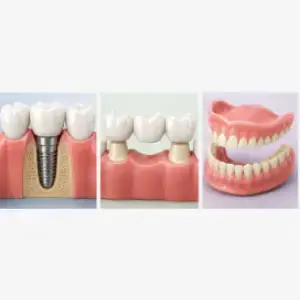
When you are missing a tooth, it is normal to wonder which replacement will actually feel right day to day. Patients often compare three main options: implants, dentures, and bridges. Each can restore your smile, but they differ in comfort, maintenance, how they impact your other teeth, and how long they typically last.
TL;DR - A Practical Way to Decide in El Paso
If you want the quickest way to narrow your choices, start with your top priority (fixed vs removable, budget, and preserving nearby teeth). Then confirm what your mouth supports with an exam and imaging.
- Dental implants are the most tooth-like and help support jawbone, but require healing time.
- Bridges can be a fixed option without surgery, but may involve reshaping neighboring teeth.
- Dentures are removable and often the most accessible starting point, but may feel less stable.
- Your bite, gum health, and bone support often matter as much as your preference.
- Bring questions so your plan matches your lifestyle, not just the missing-tooth location.
Why Replacing a Missing Tooth Matters (Not Just Looks)
A gap can change more than your smile. Teeth can drift, your bite can shift, and chewing forces can become uneven. Over time, those changes can make future treatment more complex. Our team often sees that the earlier you explore options, the more choices you tend to have.
Option 1: Dental Implants (Fixed, Tooth-by-Tooth Stability)
A dental implant is designed to replace the tooth root, with a restoration placed above it. If you are researching dental implants in El Paso, you are probably looking for something that feels stable when you chew and speak.
Why Patients Like Implants
- Stability: Typically feels closer to a natural tooth because it is anchored.
- Chewing confidence: Many patients report fewer food-avoidance habits over time.
- Bone support: Helps support the jaw in the area of the missing tooth.
- No need to crown adjacent teeth: Unlike a traditional bridge, neighboring teeth may not need reshaping.
Trade-Offs to Know
- Timeline: Treatment can involve multiple steps and healing time.
- Upfront investment: Often higher initially than removable options.
- Not one-size-fits-all: Bone and gum conditions influence candidacy.
If you want more context on implant-related restorative choices, our restorative care page reviews the services that commonly support tooth replacement planning.
Option 2: Dental Bridges (Fixed Tooth Replacement Without an Implant)
A bridge replaces a missing tooth by anchoring to the teeth next to the gap. It can be a great fit when the adjacent teeth already need crowns, or when an implant is not the preferred choice for timing or clinical reasons.
Why Patients Choose Bridges
- Fixed (not removable): Stays in place, with brushing and flossing adjustments.
- Efficient outcome: Often completed in fewer visits than an implant plan.
- Natural appearance: Designed to blend with surrounding teeth.
Trade-Offs to Know
- Adjacent teeth involvement: Traditional bridges commonly require reshaping of neighboring teeth.
- Cleaning takes practice: You may need special tools to clean under the bridge.
- Does not replace the root: It restores the visible tooth, not the root structure.
If you are exploring how crowns protect and restore teeth, our dental crowns page explains when crowns are recommended and how they support restorative plans.
Option 3: Dentures (Removable and Flexible)
Dentures can replace several teeth or a full arch. They remain a common choice for patients who want a non-surgical approach or need to replace multiple missing teeth at once.
Why Patients Choose Dentures
- Non-surgical option: Often appeals to patients who prefer to avoid surgery.
- Can replace many teeth: Useful when multiple teeth are missing.
- Adjustable over time: Relines or remakes can help as the mouth changes.
Trade-Offs to Know
- Stability varies: Fit can change over time, especially with bone and gum changes.
- Daily removal and cleaning: Requires a consistent routine.
- Learning curve: Speaking and chewing may take time to feel natural.
Many patients end up combining approaches (for example, dentures with added stability from implants). Your exam is where that becomes clear, especially when you are comparing function and comfort goals.
How El Paso Patients Typically Decide: A Simple Checklist
1) Do You Want Fixed or Removable?
If you strongly prefer fixed teeth, implants and bridges usually rise to the top. If removable is acceptable (or preferred), dentures may fit better.
2) How Important Is Preserving Nearby Teeth?
Bridges can be excellent restorations, but they may depend on the teeth next to the gap. If those teeth are untouched and healthy, many patients ask whether an implant lets them avoid changing those teeth.
3) What Matters More: Upfront Cost or Long-Term Value?
It is reasonable to balance budget with durability and maintenance. In a consultation, we can map out realistic options, including phased treatment when appropriate, so you are not forced into a single path.
4) Are You Replacing One Tooth, Several Teeth, or a Full Arch?
The best solution depends on how many teeth are missing and where. For example, a single missing tooth may be treated differently than multiple consecutive gaps.
What to Ask at a Dental Office in El Paso Before You Choose
- Which options am I a good candidate for right now, and why?
- What maintenance will I need at home for each option?
- How will this choice affect the teeth next to the gap?
- What changes should I expect in comfort and chewing?
- If my gums or bite change, what is the long-term plan?
Experience note from our team: when patients bring their top two priorities (for example, "fixed teeth" and "easy cleaning"), the consultation becomes much more productive, and we can usually narrow choices quickly.
FAQs
In many cases, yes. Because implants are anchored to the jaw, they tend to feel more stable during chewing and speaking. Comfort varies by person and by the type of denture or bridge, so a consultation is the best way to compare what you can expect.
A traditional bridge may require reshaping the teeth next to the missing tooth so the crowns can support the bridge. That can be a good option for some patients, but it is an important trade-off to discuss if those teeth are healthy.
You still may have options. Over time, bone and gum changes can affect spacing and support. A dental exam with imaging helps determine whether an implant, bridge, denture, or a combination approach is most appropriate.
Start by deciding what matters most to you: stability, longevity, keeping nearby teeth untouched, and how soon you want a fixed solution. Your dentist can outline phased treatment options and alternatives so you can match a plan to your budget and timeline.
Ask which options you qualify for, what the expected maintenance will be, how long each option typically lasts, and what steps may be needed before treatment. Also ask what the plan is if your bite or gum support changes over time.
Related Reading
- Dental implants service page
- Restorative care options
- Dental crowns (often part of bridge treatment)
- Signs that dental implants may be right for you
Conclusion: Choose the Option That Matches Your Real Life
There is no single "best" solution for everyone. The best choice is the one that fits your health, your bite, your expectations for comfort, and your day-to-day routine. A focused evaluation can clarify what is realistic for your mouth and help you feel confident about the next step.
Schedule a Tooth Replacement Consultation
If you are comparing implants, dentures, and bridges and want a clear recommendation, call our office to schedule a consultation with Dr. Dan Castro. Reach us at (915) 581-8070.
Schedule an Appointment